As seen at ALANOG-06, the Alabama Network Operators Group. Read Brother Boyd Stephens' writeup at i85 Cyber from the packed-house meetup.
  _____             _     _ _____  _____  _____
 |  __ \           (_)   | | ____|/ ____|/ ____|
 | |__) |__ _ _ __  _  __| | |__ | |  __| (___
 |  _  // _` | '_ \| |/ _` |___ \| | |_ |\___ \
 | | \ \ (_| | |_) | | (_| |___) | |__| |____) |
 |_|  \_\__,_| .__/|_|\__,_|____/ \_____|_____/
             | |
|_| Rapid5GS turns a stock Ubuntu 24.04 LTS box into a production-ready Open5GS LTE/5G packet core. One command. Free and open source, GPL v3. Written by WISP operators who got tired of six-figure core quotes.
$ git clone https://github.com/joshualambert/rapid5gs.git && cd rapid5gs && chmod +x install.sh && sudo ./install.sh
As seen at ALANOG-06, the Alabama Network Operators Group. Read Brother Boyd Stephens' writeup at i85 Cyber from the packed-house meetup.
Two scripts. That's the whole trick. One builds your core, one runs it, and neither asks you to learn a container orchestrator first.
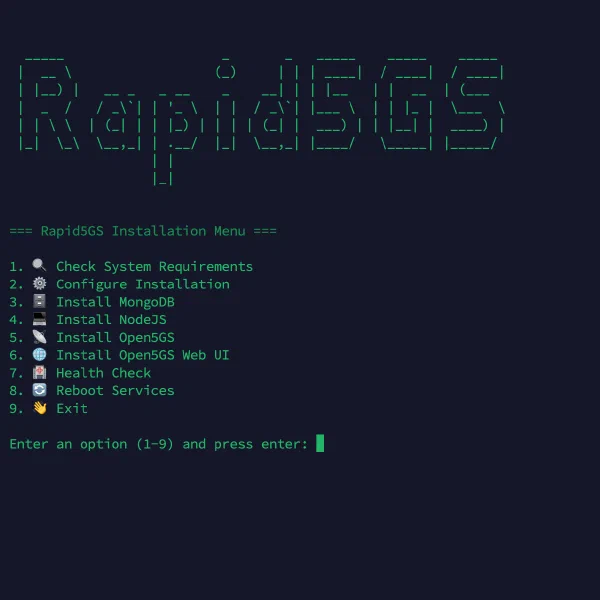
The installer that does the annoying parts so you don't have to. Point it at a fresh Ubuntu box, pick from a numbered menu, and it gets to work:
About twenty minutes later you have a running core and a web UI. The weekend you'd budgeted for reading Open5GS docs? Keep it. Go climb a tower or something.
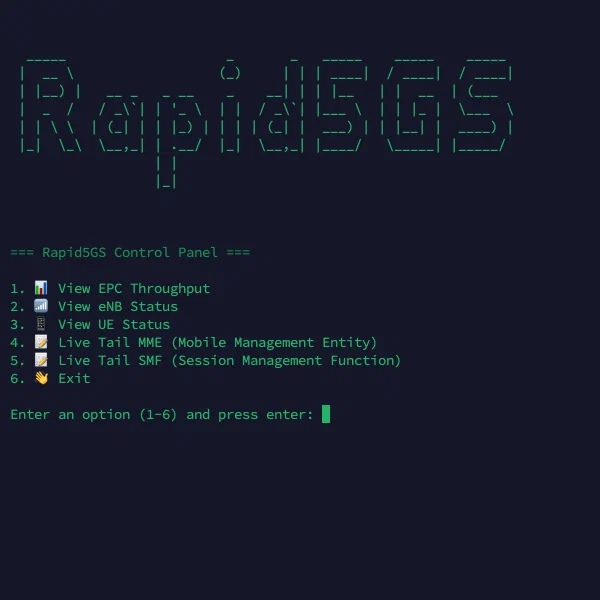
Your whole network, one menu deep. When a customer calls at 2am, you shouldn't have to remember which log lives in which directory. Everything you actually check on a live core is right here:
It's the difference between "let me SSH in and poke around" and "yeah, I'm already looking at it."
That's it. People run this core on used mini PCs that cost less than dinner for four.
Any standards-compliant 4G/5G radio should work. The list above is what we've personally put in the field.
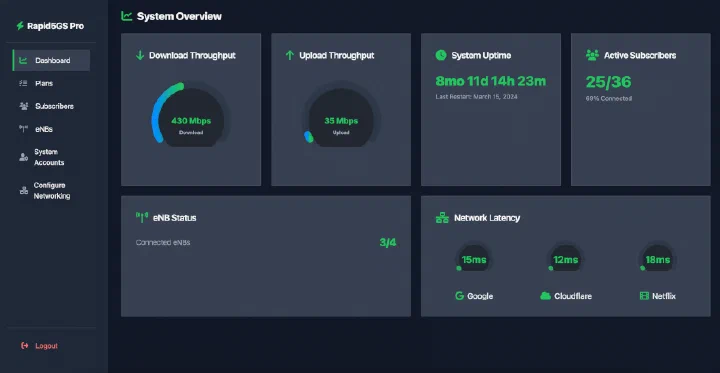
The open source version runs in a terminal, and plenty of operators never need more. Pro adds a full web GUI on top of the same battle-tested core, plus a performance stack built for networks that have outgrown a single box. Development of the Pro features is led by Michael Halls at Nimbus Solutions, the same team that backs it in production.
We refurbish, test, and sell the same CBRS hardware we recommend above, through our shop at The Edge Mile. Both options connect to Rapid5GS out of the box.
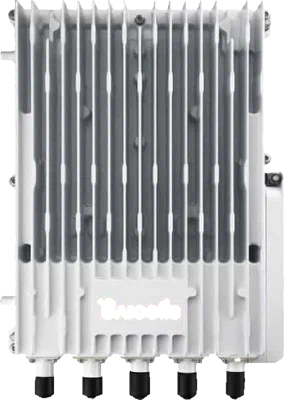
The cheapest tested way to put CBRS LTE on a tower. Converted from 436H, HaloB included, Rapid5GS ready. Perfect first sector for a new WISP or a private network pilot.
View 436Q on The Edge Mile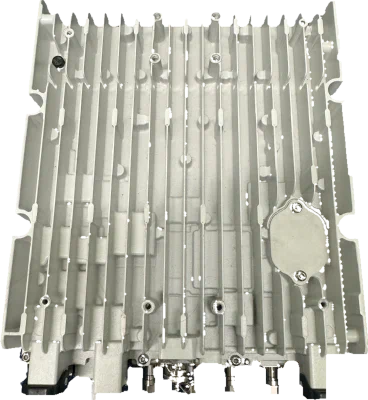
When you want real punch: Nokia AirScale, 4T4R MIMO, 20W per sector. Field-tested RRHs with sector antennas and jumpers, plus PCI planning, Google SAS setup, Rapid5GS core configuration, and 8 hours of deployment consulting.
View the Nokia site kitAlso in the shop: single tested Nokia AZQC RRHs at $1,100 and the Titan 4000 CBRS CPE at $315.

Vertical Axis is a full-service tower contractor that knows our stack: CBRS sector builds, SAS registration, antennas, and backhaul. If you'd rather not climb, they'll put your private LTE and 5G equipment in the air.
Burning your own SIM cards? Our free generator builds the values for a whole batch, right in your browser:
Kept the installer's defaults? Pick the 901-70 preset and you're set: the APN already matches. Keys are generated in your browser and never leave your machine.
Open the SIM card generator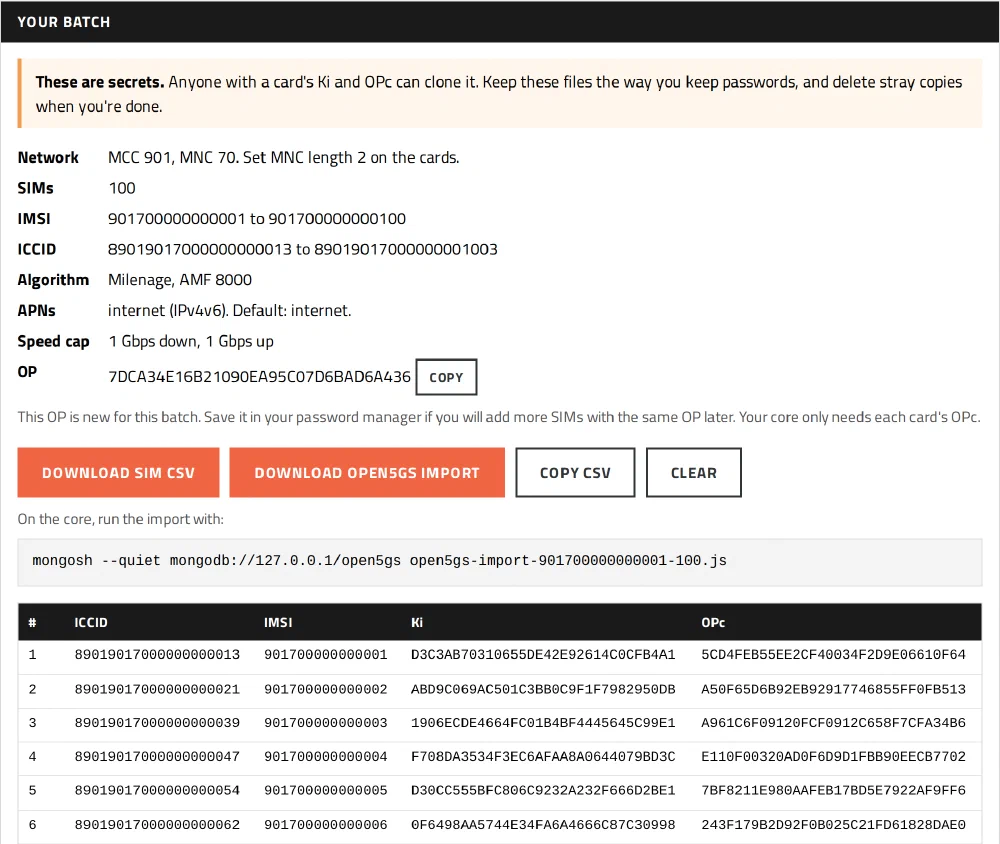

Packets flowing is half the job. Subscribers pay the tower rent. ISP Hyperdrive, our affiliated marketing shop, runs websites, social, and ad spend for independent WISPs. Conversion-built sites with self-serve ordering, and even tower cameras on your local news station.
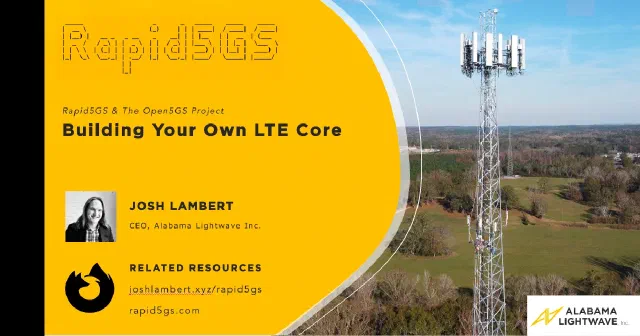
CBRS solves hard last-mile problems, but the premium platforms price out self-funded WISPs. LTE is the affordable path if someone tames the complexity. That's the whole point of Rapid5GS.
Read on joshlambert.xyz →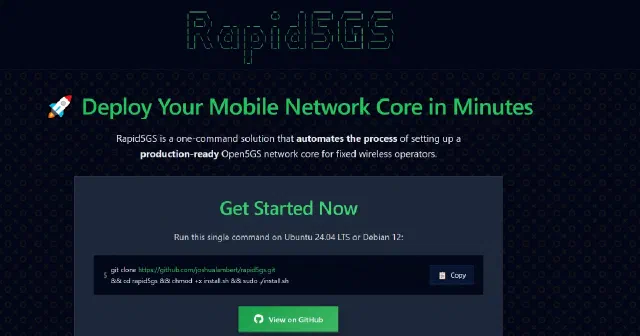
How years of real Open5GS deployments became an installer. Every configuration problem we solved in the field got scripted, so you don't solve it again.
Read on joshlambert.xyz →
How corporate overreach threatens the shared spectrum that small operators and national security both depend on. Why CBRS is worth defending.
Read on joshlambert.xyz →Josh Lambert, creator of the open source version of Rapid5GS, has run a WISP in Alabama through every stage: planning, construction, licensing, marketing, and the parts nobody warns you about. Bring him in as a fractional CXO for your private LTE/5G deployment, from the first RF study to the first paying subscriber.